
Tirzepatide
WHAT IS TIRZEPATIDE / NIACINAMIDE INJECTION?
Tirzepatide / Niacinamide Injection is a compounded formulation that combines the dual glucose-dependent insulinotropic polypeptide and glucagon-like peptide-1 receptor agonist tirzepatide with the B-vitamin derivative niacinamide. This compounded injection is available exclusively through our 503A compounding pharmacy pursuant to a patient-specific prescription.
Tirzepatide regulates blood sugar, reduces appetite, and increases fullness. Niacinamide aids in mitochondrial support and cellular energy conversion.
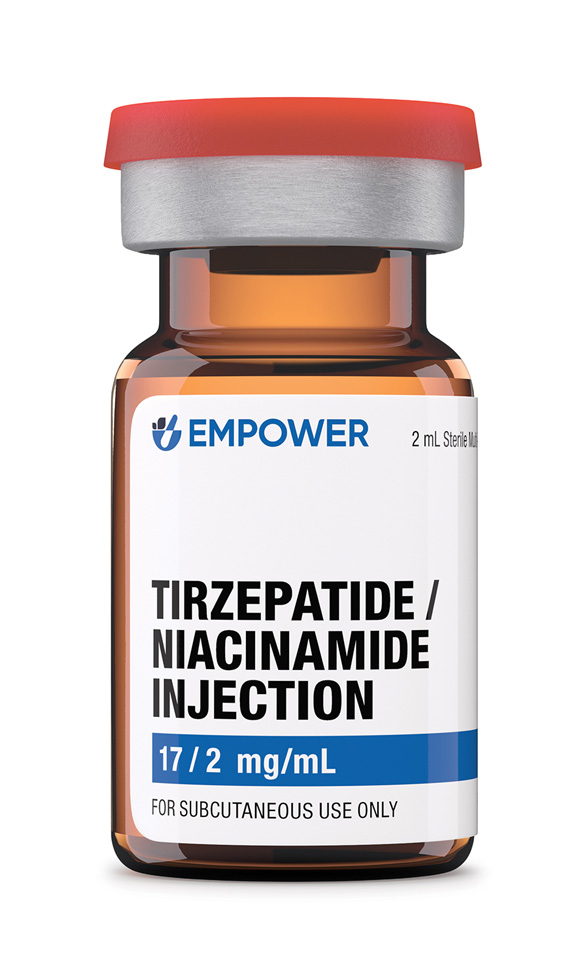
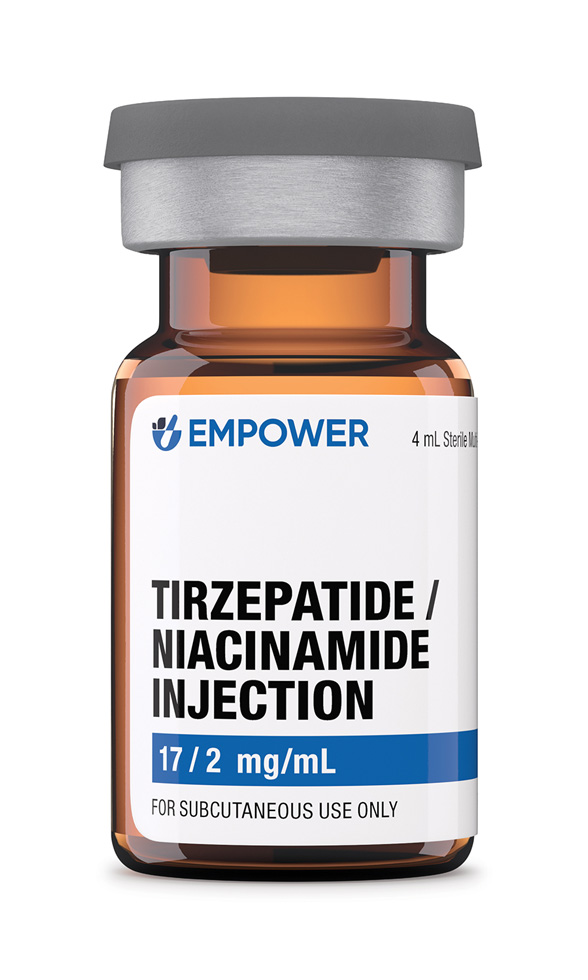
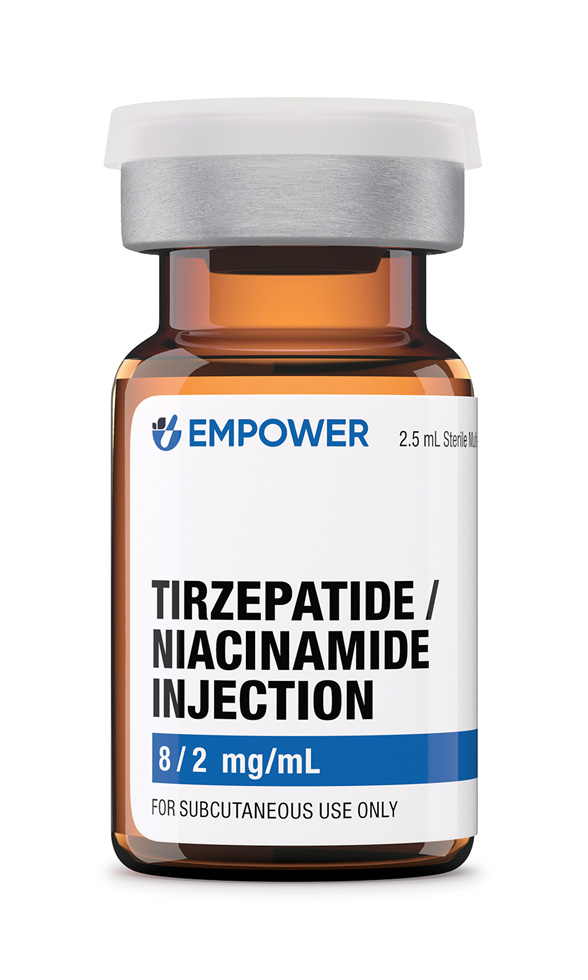
Physicians may prescribe this compounded medication for patients who, the physician determines, may benefit from the combined effects of both active ingredients. The compounded medication is prepared in a sterile environment according to compounding standards. The injection is available in multiple dosage strengths to accommodate physician determinations of patient need, with formulations that may include 17 mg/mL tirzepatide with 2 mg/mL niacinamide in 4 mL vials, 8 mg/mL tirzepatide with 2 mg/mL niacinamide in 2.5 mL vials, and 17 mg/mL tirzepatide with 2 mg/mL niacinamide in 2 mL vials.
Patients receiving this medication should understand that it is a compounded preparation, meaning it is specifically prepared for individual use and is not a commercially manufactured pharmaceutical product. Compounded medications are not FDA-approved medications, and FDA does not review compounded medications for safety or efficacy.
Healthcare providers typically prescribe Tirzepatide / Niacinamide Injection for patients who the physician has determined may benefit from the metabolic effects of tirzepatide while potentially gaining additional benefits from niacinamide supplementation. The formulation process ensures that both active ingredients maintain their stability and when combined in the injection vehicle.
Patients and healthcare providers should be aware that this is a compounded medication tailored for individual patients and should only be used under appropriate medical supervision. The compounded medication is prepared in accordance compounding guidelines. Regular monitoring and follow-up with prescribing healthcare providers is essential to optimize therapeutic outcomes and ensure appropriate response to treatment.
FREQUENTLY ASKED QUESTIONS
What is the difference between this compounded injection and commercially available tirzepatide products?
Tirzepatide / Niacinamide Injection is a compounded medication that combines tirzepatide with niacinamide, whereas commercially available products contain only tirzepatide. Compounded medications are prepared individually for specific patients based on physician prescriptions of patient need. Compounded medications may offer dosing flexibility or combinations not available in commercial products. Compounded medications are not FDA-approved drugs. FDA does not review compounded medications for safety or efficacy.
Can I take this medication with my current diabetes medications?
This medication may be used with other diabetes medications, but dosing adjustments are often necessary to prevent hypoglycemia. The combination with insulin, sulfonylureas, or other glucose-lowering medications requires careful monitoring and potential dose reductions of existing medications. Your healthcare provider will need to review all current medications and may need to adjust doses or timing as tirzepatide therapy is initiated and titrated. Regular blood glucose monitoring becomes even more important when combining multiple glucose-lowering therapies, and you should work closely with your healthcare team to optimize your medication regimen.
What should I do if I experience severe nausea or vomiting?
Mild to moderate nausea is common when starting this medication and often improves with time. However, severe or persistent nausea and vomiting require medical attention. If you experience severe symptoms, contact your healthcare provider, as dose reduction or temporary discontinuation may be necessary. In the meantime, try eating smaller, more frequent meals, avoiding fatty or spicy foods, and staying well-hydrated. If vomiting prevents you from keeping fluids down or if you develop signs of dehydration, seek immediate medical care. Your healthcare provider may recommend anti-nausea medications or adjust your dosing schedule to improve tolerance.
Is it safe to drink alcohol while using this medication?
Alcohol consumption should be approached with caution while using this medication. Alcohol may increase the risk of hypoglycemia and can exacerbate gastrointestinal side effects such as nausea and vomiting. If you choose to consume alcohol, do so in moderation and with food to help minimize these risks. Monitor your blood glucose levels more frequently when consuming alcohol, and be aware of symptoms of low blood sugar. Discuss your alcohol consumption habits with your healthcare provider to determine what level of consumption, if any, is appropriate for your individual situation.
Can I continue this medication if I’m planning to become pregnant?
This medication is not recommended during pregnancy due to insufficient safety data and potential risks to fetal development. If you are planning to become pregnant, you should discuss alternative treatment options with your healthcare provider well before conception. Effective contraception is recommended while using this medication to prevent unintended pregnancy. If you become pregnant while taking this medication, contact your healthcare provider immediately to discuss whether this medication can be continued.
What happens if I miss a dose?
If you miss a dose, administer it as soon as possible within 4 days of the scheduled time. If more than 4 days have passed, skip the missed dose and resume your regular weekly schedule with the next planned injection. Do not double dose or administer two injections within 3 days of each other to make up for a missed dose. Missing occasional doses is not typically harmful, but try to maintain consistency for optimal therapeutic benefits. If you frequently forget doses, discuss strategies with your healthcare provider to improve adherence, such as setting reminders or adjusting your injection day.
Are there any dietary restrictions I should follow while taking this medication?
While there are no absolute dietary restrictions, certain dietary approaches may help optimize the medication’s benefits and minimize side effects. Eating smaller, more frequent meals may help reduce gastrointestinal side effects. Avoiding high-fat, greasy, or very spicy foods may also help minimize nausea and digestive discomfort. Focus on balanced nutrition with adequate protein, as the appetite suppression effects may sometimes lead to insufficient protein intake. Stay well-hydrated, especially if experiencing any gastrointestinal side effects. Your healthcare provider or a registered dietitian can provide personalized nutrition guidance to complement your treatment.
How should I rotate injection sites, and what sites are recommended?
Recommended injection sites include the abdomen (avoiding the area around the navel), the front and sides of the thighs, and the back of the upper arms. Rotate between different sites and different areas within each site to prevent injection site reactions and ensure consistent absorption. Keep a record of injection sites to help with systematic rotation. Avoid injecting into areas that are tender, bruised, red, hard, or scarred. Clean the injection site with alcohol before each injection and allow the area to dry completely. Use each injection site only once per week, giving the area time to recover between injections.
What should I tell other healthcare providers about this medication?
Inform all healthcare providers that you are taking Tirzepatide / Niacinamide Injection, including dentists, specialists, emergency room physicians, and pharmacists. This is particularly important before any medical procedures, surgeries, or when starting new medications. The medication can affect blood glucose levels and gastric emptying, which may be relevant for various medical procedures. Carry a list of all your medications, including this compounded injection, and ensure it’s included in your medical records. If you require emergency care, make sure emergency personnel are aware of your medication use, as it may affect treatment decisions and blood glucose.
Contact us about Tirzepatide / Niacinamide Injection today!